Abstract: The nature of elastic deformation is examined in the light of the
potential theory. The concepts and mathematical treatment of elasticity and the choice
of equilibrium conditions are adopted from the mechanics of discrete bodies, e.g.,
celestial mechanics; they are not applicable to a change of state. By nature, elastic
deformation is energetically a Poisson problem since the buildup of an elastic potential
implies a change of the energetic state in the sense of thermodynamics. In the
classical theory, elasticity is treated as a Laplace problem, implying that no
change of state occurs, and there is no clue in the Euler-Cauchy approach that
it was ever considered as one. The classical theory of stress is incompatible with
the potential theory and with the nature of the problem; it is therefore wrong. The
key point in the understanding of elasticity is the elastic potential.
Abstract: The thermodynamic definition of pressure P =
dU/dV
is one form of the principle that in a given state, the mass in V and
potential are proportional. Subject of this communication is the significance
of this principle for the understanding of Cauchy stress.
Proof that the the Cauchy continuity approach as given by Truesdell (1990) is incompatible with the Gauss divergence theorem. The argument is repeated in "Systematics of energetic terms" and "Cauchy's Stress Theory in a Modern Light", see below.
Abstract: In an exhaustive presentation of the linear theory of elasticity by
Gurtin (1972) the author included a chapter on the relation of the theory of elasticity
to the theory of potentials. Potential theory distinguishes two fundamental physical
categories: divergence-free and divergence-involving problems. From the criteria given
in the source quoted by the author it is evident that elastic deformation of solids falls
into the latter category. It is documented in this short note that the author presented
volume-constant elastic deformation as a divergence-free physical process, systematically
ignoring all the information that was available to him that this is not so.
In plain language: Gurtin knew since 1972 [that is: for 50 years !!!] that continuum mechanics and potential theory are incompatible, to the effect that continuum mechanics must be considered refuted. He gave an intentionally misleading presentation of potential theory to hide the incompatibility from his readers.
Abstract: The systematics of energetic terms as they are taught in continuum
mechanics deviate seriously from standard views in physics, resulting in a profound
misconception. It is demonstrated that the First Law of Thermodynamics has been
routinely re-interpreted in a sense that would make it subordinate to Bernoulli's
energy conservation law. Furthermore, it is shown that the attempt by Gibbs to find
a thermodynamic understanding for elastic deformation does not sufficiently account
for all the energetic properties of such a process.
Proof of error is given to refute continuum mechanics using standard textbooks: the Euler-Cauchy theory is energetically conservative; the work term is always zero; the stress tensor does not exist; strain is not a physically relevant term, specifically: it does not contain energetic information; bonds are never mentioned; and thermodynamic thought is nowhere to be found, although elastic deformation is by nature a change of state in the sense of the First Law.
Abstract: The Cauchy stress theory has been shown to be profoundly at variance with the principles of the theory of potentials. Thus, a new physical approach to deformation theory is presented which is based on the balance of externally applied forces and material forces. The equation of state is generalized to apply to solids, and transformed into vector form. By taking the derivatives of an external potential and the material internal energy with respect to the coordinates, two vector fields are defined for the forces exerted by surrounding at the system, subject to the boundary conditions, and vice versa, subject to the material properties. These vector fields are then merged into a third one that represents the properties of the loaded state. Through the work function the force field is then directly transformed into the displacement field. The approach permits fully satisfactory prediction of all geometric and energetic properties of elastic and plastic simple shear. It predicts the existence of a bifurcation at the transition from reversible to irreversible behavior whose properties permit correct prediction of cracks in solids. It also offers a mechanism for the generation of sheath folds in plastic shear zones and for turbulence in viscous flow. Finally, an example is given how to apply the new approach to deformation of a discrete sample as a function of loading configuration and sample shape.
The energetics of pure and simple shear for elastic and plastic deformation, as predicted in the paper, can be compared with experimental data by Treloar 1975 (elastic) and Franssen 1993 (plastic).
Abstract: The 180 year old stress theory by Cauchy is found to be insufficient to serve as a basis for a modern understanding of material behavior. Six reasons are discussed in detail: (1) Cauchy's theory, following Euler, considers forces interacting with planes. This is in contrast to Newton's mechanics which considers forces interacting with radius vectors. (2) Bonds in solids have never been taken into account. (3) Cauchy's stress theory does not meet the minimum conditions for vector spaces because it does not have a metric. It is not a field theory, and not in Euclidean space. (4) Cauchy's theory contains a hidden boundary condition that makes it less than general. (5) The current theory of stress is found to be at variance with the theory of potentials. (6) The theory is conceptually incompatible with thermodynamics for physical and geometrical reasons.
The sharpest and most uncompromising refutation of continuum mechanics I could possibly write.
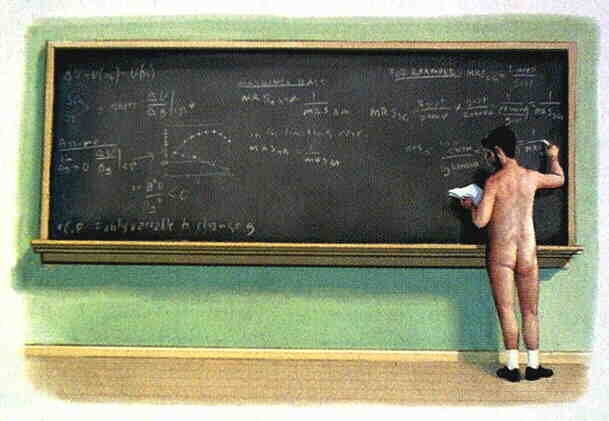
The naked continuum mechanicist
Zeitschrift für Naturforschung 56a, pp.794-808, 2001
Unorthodox thoughts about deformation, elasticity, and stress
Cauchy stress in mass distributions
Zeitschrift für angewandte Mathematik und Mechanik (ZAMM) 81, Suppl. 2, pp.S309-S310, 2001
Linear elasticity and potential theory: a comment on Gurtin (1972)
International Journal of Modern Physics B, 22, pp.5035-5039, 2008
DOI 10.1142/S0217979208049224
Electronic postprint version of published article; © World Scientific Publishing Company
Publisher's printed version:
click here (requires subscription to journal)
Readers at RWTH Aachen can access the original paper through the university library
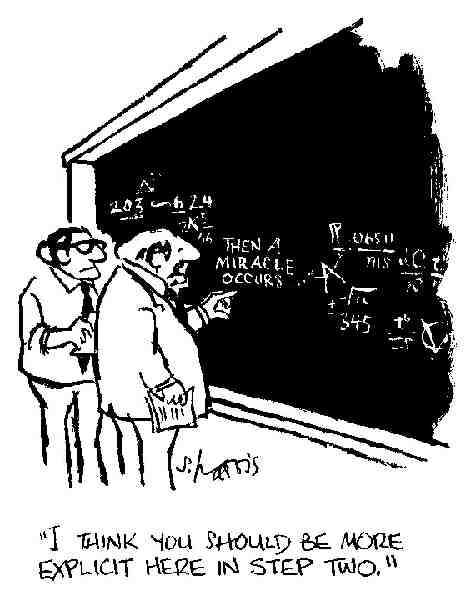
On the systematics of energetic terms in continuum mechanics,
and a note
International Journal of Modern Physics B, 22, pp.4863-4876, 2008
on Gibbs (1877)
DOI 10.1142/S0217979208049078
Electronic postprint version of published article; © World Scientific Publishing Company
Publisher's printed version:
click here (requires subscription to journal)
Readers at RWTH Aachen can access the original paper through the university library
An approach to deformation theory based on thermodynamic principles
International Journal of Modern Physics B, 22, pp.2617-2673, 2008
DOI 10.1142/S021797920803985X
Electronic postprint version of published article; © World Scientific Publishing Company
Publisher's printed version:
click here (requires subscription to journal)
Readers at RWTH Aachen can access the original paper through the university library
Conventional thermodynamics is written in scalar form [P, V, T], which implies that a force field acting upon the system is isotropic. The new approach is the thermodynamic theory in vector field form [f, r, T] such that f can be used to model the anisotropic external boundary conditions. For isotropic boundary conditions the scalar form and the vector field form deliver identical results. But now it is possible to understand a general anisotropic elastic loading as a change of state in the thermodynamic sense. The new approach resulted in the discovery of a new thermodynamic state function, the shear dilation, which is the work done by shear forces.
Cauchy's Stress Theory in a Modern Light
European Journal of Physics, 35, 015010 (15pp), 2014
DOI:10.1088/0143-0807/35/1/015010
Front page
Back to the top